Book Now – Submit Your Reservation Using the Booking Form
Whale Watching Trincomalee: 2026 Ultimate Tour Experience
Experience the thrill of Whale Watching in Trincomalee, one of Sri Lanka’s top marine adventures. Organized by Pigeon Island Tours, this journey promises close encounters with majestic whales, playful dolphins, and exotic marine life. Contact us today at +94 713 227 050 to secure your spot on this unforgettable adventure.
Why Choose Whale Watching Trincomalee?
Trincomalee, located on Sri Lanka’s northeast coast, is renowned for its deep-sea waters, making it a prime location for observing whales and dolphins. The area is especially famous for sightings of blue whales, sperm whales, and orcas, offering tourists a chance to witness nature’s largest mammals in their natural habitat.
- Proximity: Just 30 minutes from Trincomalee town, easy to access by boat.
- Rich Marine Life: Dolphins, whales, and colorful fish make every trip unique.
- Expert Guidance: Experienced local guides ensure safe and informative tours.
- Photography Opportunities: Capture breathtaking moments in the ocean.
Tour Itinerary
Our Whale Watching tour is designed for maximum comfort and excitement. Here’s what you can expect:
Morning Departure
We begin early in the morning to increase the chance of spotting whales. Pickup from your hotel or guesthouse is arranged by Pigeon Island Tours. Boats are equipped with safety gear and life jackets.
Boat Ride & Whale Spotting
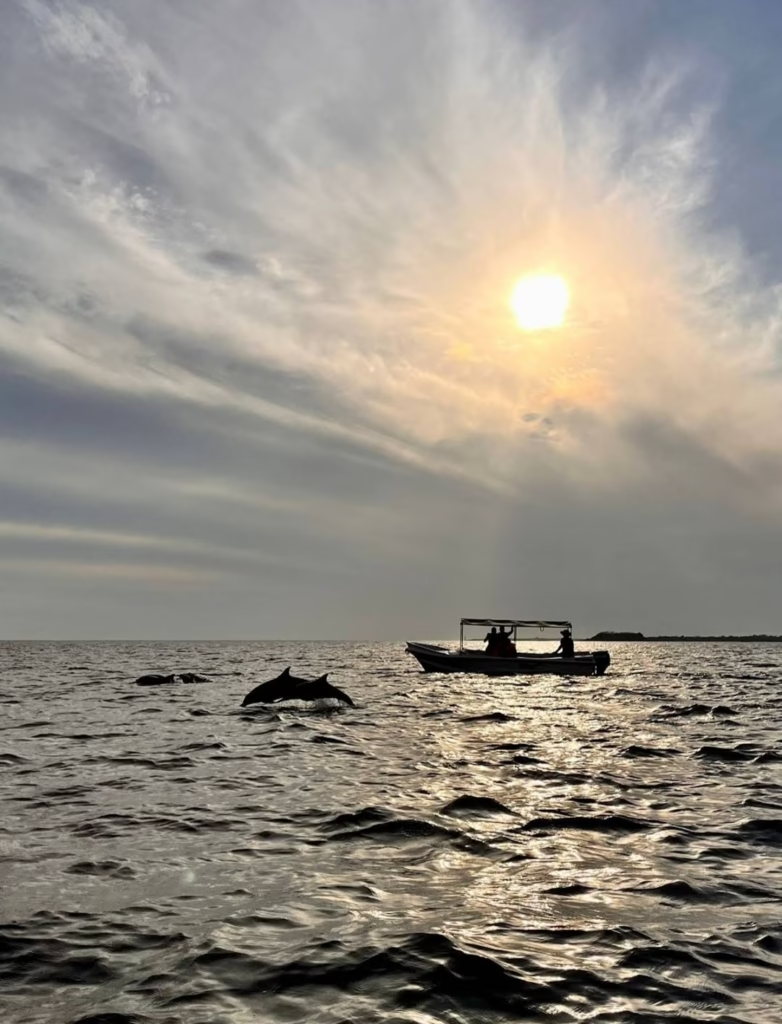
The journey takes you into the deep waters of the Trincomalee coast. Our guides will use their expertise to locate whales and dolphins. Binoculars are provided, and the crew explains marine behavior and fascinating facts.
Snorkeling & Marine Observation
Depending on the tour selected, guests can enjoy light snorkeling around nearby coral reefs, where tropical fish and other marine creatures thrive. Experienced instructors guide beginners for a safe experience.
Return & Drop-off
After several hours at sea, the boat returns to the harbor. Guests are dropped back to their hotels with memories of an unforgettable day.
Best Season for Whale Watching in Trincomalee
The best time to enjoy Whale Watching in Trincomalee is between April and October. During these months, calm seas and clear skies create perfect conditions for whale sightings. This period also coincides with the migration of Blue Whales and Sperm Whales through the deep-water channels near Trincomalee. Avoid the northeast monsoon from November to January when the sea can be rough.
🐋 Whale and Dolphin Species You Can See in Trincomalee
Trincomalee’s deep ocean trench—located just a few kilometers offshore—creates a marine paradise that attracts a wide range of whale and dolphin species. Here’s what you might encounter on your next ocean safari:
Whale Species in Trincomalee
1. Blue Whale (Balaenoptera musculus)
The Blue Whale is the largest animal on Earth, reaching up to 25 meters in length. They can be seen surfacing to breathe, often spouting water high into the air before gracefully diving back into the ocean. These gentle giants feed mainly on krill and are a breathtaking sight for wildlife lovers.
2. Sperm Whale (Physeter macrocephalus)
Known for their massive square heads, Sperm Whales dive deep into the ocean, sometimes over 1,000 meters, to hunt giant squid. They are among the most commonly sighted whale species in Trincomalee and are often seen traveling solo or in small groups.
3. Bryde’s Whale (Balaenoptera brydei)
Smaller but highly active, Bryde’s Whales are fast swimmers and often swim near the surface. They can be recognized by the three ridges on their head and are known to breach out of the water while feeding on small schooling fish.
4. Fin Whale (Balaenoptera physalus)
The Fin Whale is the second-largest whale species. Occasionally spotted off the Trincomalee coast, they are sleek, fast, and often travel in pairs or small groups. They are easily recognized by their slender body and asymmetrical jaw coloring.
5. Orca / Killer Whale (Orcinus orca)
Although rare, Orcas (Killer Whales) have been sighted in Sri Lankan waters, including Trincomalee. With their striking black-and-white pattern and intelligent hunting strategies, they are an unforgettable sight for lucky visitors.
Dolphin Species in Trincomalee
1. Spinner Dolphin (Stenella longirostris)
The most common and playful dolphin in Trincomalee, Spinner Dolphins are famous for their acrobatic leaps and joyful spins. They usually travel in large pods of hundreds, creating one of the most exciting spectacles on the water.
2. Bottlenose Dolphin (Tursiops truncatus)
Known for their intelligence and friendly nature, Bottlenose Dolphins are slightly larger and frequently swim alongside boats. Their curved dorsal fins and smiling faces make them a favorite among tourists.
3. Striped Dolphin (Stenella coeruleoalba)
With elegant blue-gray stripes running along their sides, Striped Dolphins are swift swimmers and occasionally appear offshore. They often leap together in coordinated movements, making them a joy to watch.
4. Risso’s Dolphin (Grampus griseus)
Risso’s Dolphins have distinctive pale scars on their gray bodies, caused by social interactions. These deep-water dwellers are powerful swimmers and are sometimes spotted during offshore whale watching trips.
5. Fraser’s Dolphin (Lagenodelphis hosei)
Though less common, Fraser’s Dolphins travel in energetic groups and can be identified by their robust bodies and dark lateral band running along their sides.
Why Trincomalee Is a Marine Paradise
- The **deep-water trench** close to shore allows whale watching without long boat rides.
- The **Indian Ocean current** brings nutrient-rich waters that attract whales, dolphins, and fish.
- **Calm sea conditions** from April to October make sightings reliable and enjoyable.
Tour Prices & Packages
Whale Watching Trincomalee- 3 Hours Shared Trip Adults (Age 12+)
| Passengers | Price |
|---|---|
| 1 Adult | €25 |
| 2 Adults | €25 x 2 = €50 |
| 3 Adults | €25 x 3 = €75 |
| 4 Adults | €25 x 4 = €100 |
| 5 Adults | €25 x 5 = €125 |
| 6 Adults | €25 x 6 = €150 |
Same Price 3 Hours Shared & Private Trip Child (Age 6-11 Years )
| Passengers | Price |
|---|---|
| Per Child Age 6-11 Years | €18 |
Same Price 3 Hours Shared & Private Trip Under Five Years old infant (Not Recommend)
| Passengers | Price |
|---|---|
| Per Infant Age Under 5 Years | €10 |
Whale Watching Trincomalee- 3 Hours Private Trip Adults (Age 12+)
| Passengers | Price |
|---|---|
| 1 Adult | €85 |
| 2 Adults | €50 x 2 = €100 |
| 3 Adults | €40 x 3 = €120 |
| 4 Adults | €35 x 4 = €140 |
| 5 Adults | €32 x 5 = €160 |
| 6 Adults | €30 x 6 = €180 |
All prices include pickup, boat, guide, safety equipment, and refreshments.
Safety Guidelines
- Life jackets are provided for all guests.
- Follow the guide’s instructions and respect marine life.
- Maintain a safe viewing distance from whales and dolphins.
- Use reef-safe sunscreen to protect the ocean environment.
What to Bring
- Camera or smartphone for photos
- Hat, sunglasses, and sunscreen
- Swimwear and towel (for snorkeling options)
- Light snacks and drinking water
- Motion sickness tablets if needed
FAQs
How long is the whale watching tour?
The average tour lasts 3 hours, depending on weather and whale activity.
Is it safe for children?
Yes, our tours are family-friendly and safe. Life jackets are mandatory for all passengers.
Do I need snorkeling experience?
No experience is needed. Our crew provides full guidance and supervision for beginners.
Can I see both whales and dolphins on one tour?
Yes! Most tours include sightings of both whales and large pods of dolphins during the same trip.
h3>Can I Swim with whales and dolphins tour?Not allowed! It is an illegal activity.
Booking & Contact Information
Book your Whale Watching Trincomalee experience directly with Pigeon Island Tours for professional service and authentic local expertise.
📞 Call or WhatsApp: +94 713 227 050
🌐 Website: www.pigeonislandtours.com
Why Choose Pigeon Island Tours?
- 18+ years of professional wildlife and marine experience
- Certified guides and safe, well-equipped boats
- Flexible private and group packages
- Eco-friendly and responsible tourism practices
Nearby Attractions in Trincomalee
- Koneswaram Temple: An ancient Hindu temple with panoramic ocean views
- Nilaveli Beach: White sandy beach ideal for swimming and sunbathing
- Pigeon Island National Park: Famous for coral reefs and snorkeling
- Fort Frederick: Colonial fort offering a blend of history and nature
Conclusion
Whale Watching in Trincomalee is an unforgettable marine adventure. Witness the power and grace of the ocean’s giants, feel the joy of watching playful dolphins, and enjoy the serene beauty of Sri Lanka’s eastern coast. Contact Pigeon Island Tours at +94 713 227 050 to book your experience today — and make memories that will last a lifetime.